How to build a monthly budget you can keep
A simple, honest structure for income, bills, spending and savings, plus the small weekly habits that keep a monthly budget working after the first month.
Most budgets don’t fail because the math is hard. They fail because they’re too detailed to keep up, or too strict to live with. A budget you can keep is simple enough to update in a few minutes, and honest enough that the numbers mean something.
This guide walks through a straightforward structure that works for most households, and the small habits that keep it going.
Start with what actually comes in
Write down your take-home pay: what lands in your account after taxes and deductions, not your salary. If your income changes from month to month, use a cautious figure, such as your lowest typical month, and treat anything above it as a bonus.
Add any other regular income, like side work or support payments. This is the total you have to give a job.
List your bills
Next, list every bill and subscription that repeats: rent or mortgage, utilities, phone and internet, insurance, loan minimums, streaming services, memberships. For each one, note the amount and when it’s due.
Two things are easy to miss here:
- Yearly and quarterly charges. Divide them by twelve, or three, and plan for that amount each month, so a renewal never catches you out.
- Subscriptions you rarely use. Seeing their true yearly cost side by side is often enough to cancel one or two.
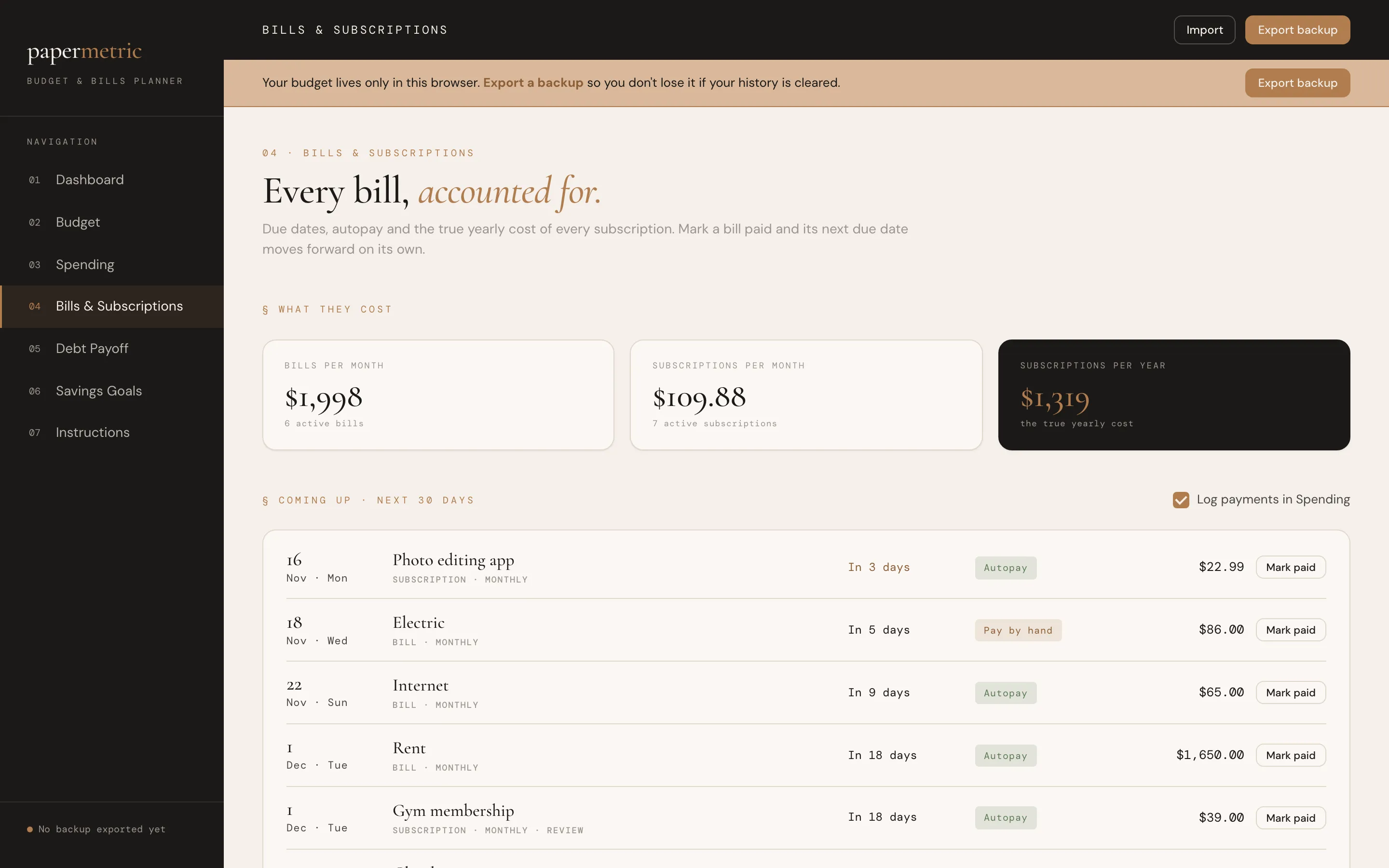
Seeing the monthly and yearly cost of each bill makes forgotten subscriptions easy to spot.
Group everything into three buckets
Rather than tracking dozens of categories with equal attention, group them into three:
- Needs: the things you have to pay, like housing, utilities, groceries, transport, insurance and minimum debt payments.
- Wants: the things you choose, like eating out, shopping, entertainment and personal care.
- Savings & debt: money you put toward your future, like an emergency fund, savings goals and extra payments on debt.
A popular rule of thumb, the 50/30/20 guide, suggests about half your take-home pay for needs, 30% for wants and 20% for savings and debt. Treat it as a starting point, not a rule. In an expensive city, needs often take more than half, and that’s fine. What matters is that you can see the split and decide on purpose.
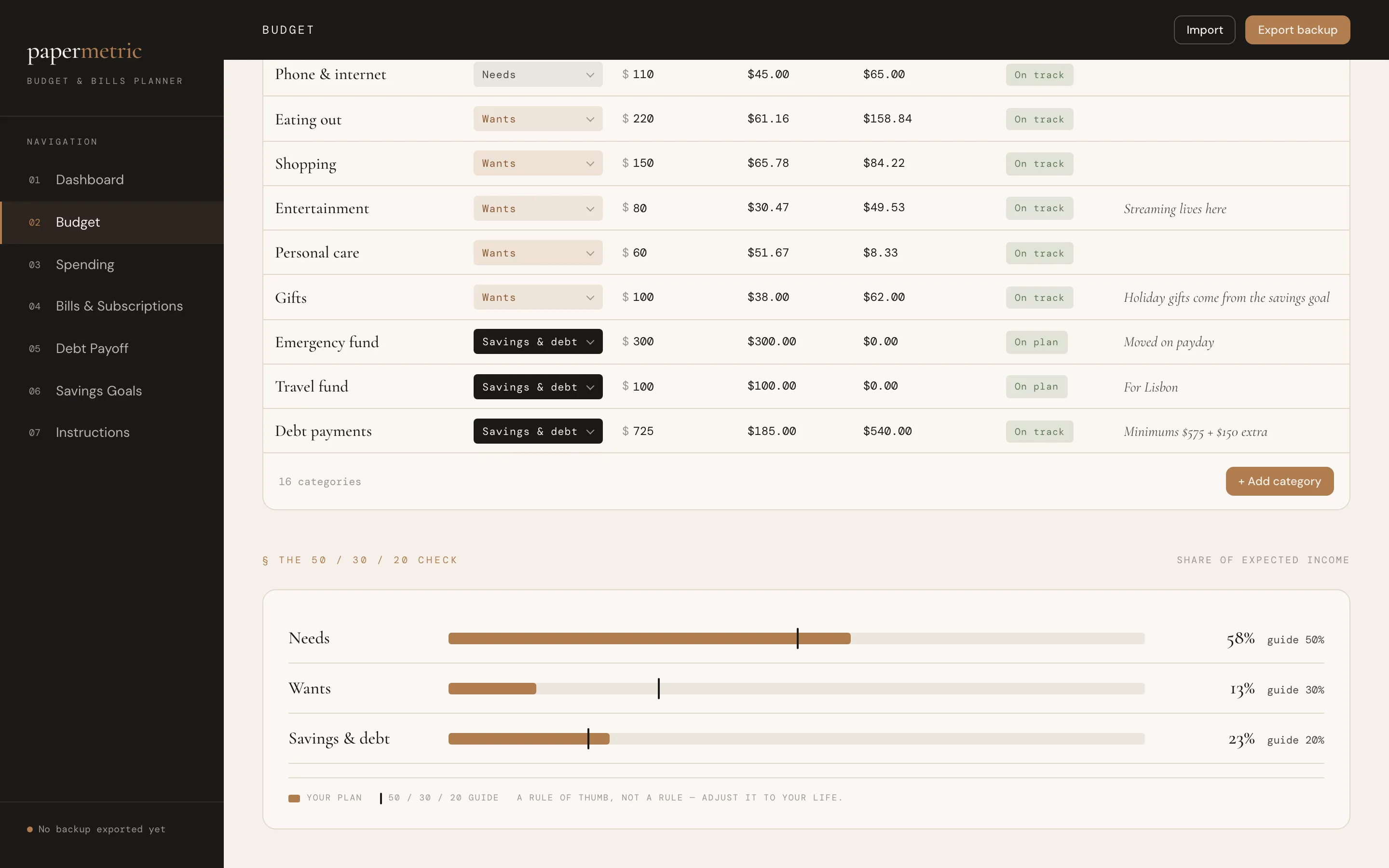
A 50/30/20 check compares your plan with the guide, as a rule of thumb rather than a rule.
Give every dollar a job
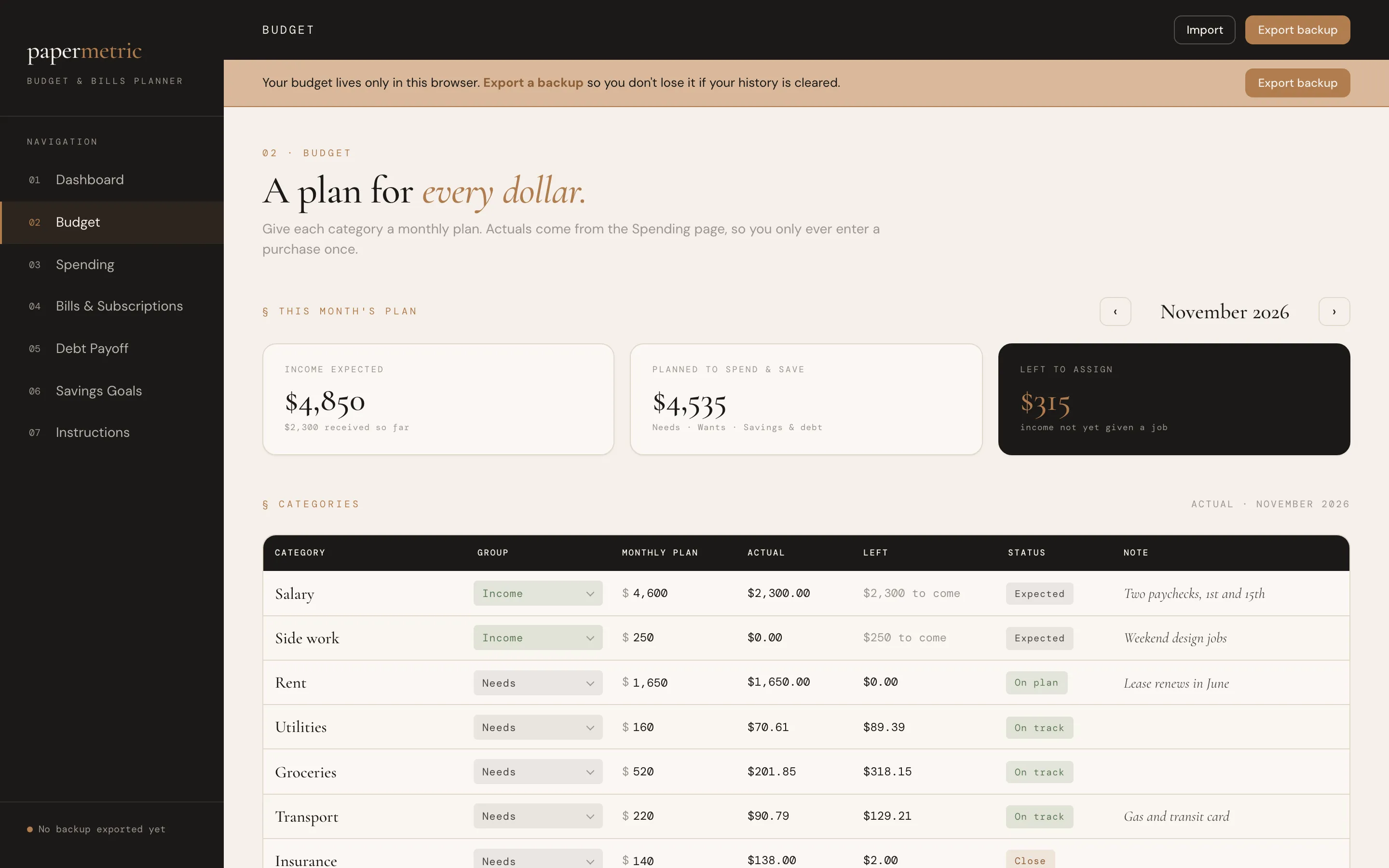
Now plan an amount for each category, so the total matches your income. Whatever is left over isn’t extra spending money; assign it somewhere, even if that’s savings. This is sometimes called zero-based budgeting: income minus everything you’ve planned should come to zero.
It sounds strict, but it’s freeing. When every dollar has a job, you know exactly what you can spend without guessing.
Plan for the irregular
Some costs don’t arrive every month: car repairs, gifts, annual fees, travel. Rather than letting them blow up one month’s budget, set aside a small amount each month in a savings category for each. When the cost arrives, the money is already there.
Track spending, lightly
You don’t need to log every coffee the moment you buy it. Two simple approaches both work:
- A minute a day: add what you spent today.
- Once a week: sit down with your bank statement and log the week in one go.
Pick whichever you’ll actually do. The point is to know, by the end of each week, where you stand against your plan.
Review once a month
At the end of the month, spend fifteen minutes looking back:
- Which categories went over, and was that a one-off or a pattern?
- Did your bills change?
- Are your savings goals on pace?
Then adjust next month’s plan. A budget isn’t a test you pass or fail; it’s a plan you keep improving.
Keep it kind: a month that goes over plan isn’t a failure. It’s information. Adjust the plan, not your opinion of yourself.
Putting it together
A budget you can keep comes down to a few steps:
- Know your take-home pay.
- List your bills, including the yearly ones.
- Group spending into needs, wants and savings & debt.
- Give every dollar a job.
- Set aside a little each month for irregular costs.
- Track lightly every week, and review monthly.
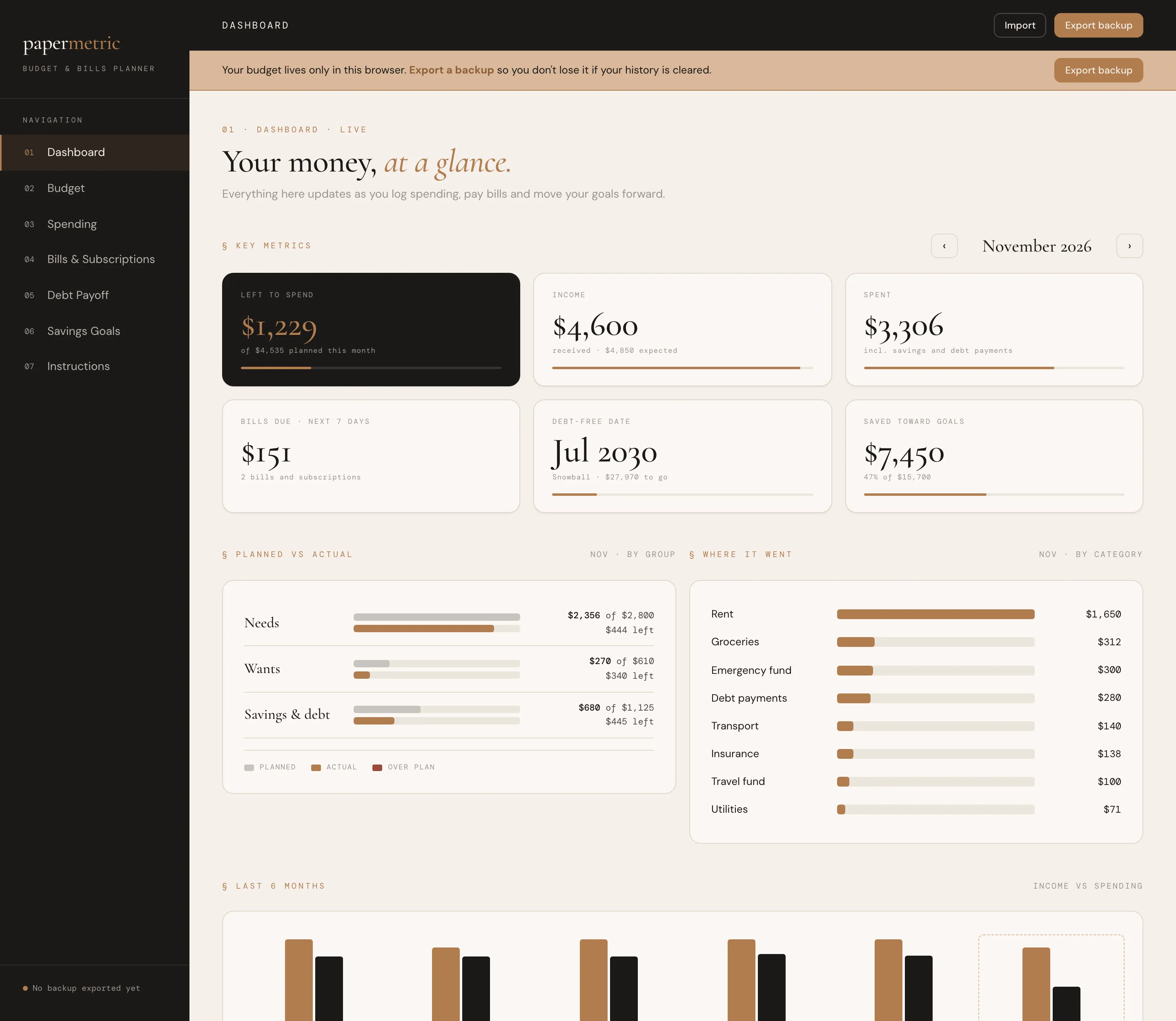
If you’d rather not build this from scratch, the Budget & Bills Planner has the whole structure ready: a monthly budget grouped into needs, wants and savings & debt, every bill and subscription, a debt payoff plan, savings goals and a dashboard that updates as you go. There’s no bank login, and nothing is uploaded.
This guide is general information to help you plan, not financial advice.